Placement Mistakes That Reduce Safe Effectiveness in Dubai Apartments & Villas

Soundproof Security: How Panic Rooms Become Personal Havens

Complete Guide to High-End Safes: Jewelry, Watch, Document & Gun Storage Solutions
In Dubai’s residential architecture, security is often treated as a product rather than a system particularly when it comes to safes Dubai homeowners install with confidence but without placement strategy. Homeowners invest in certified locks, biometric safes, and premium alloys yet overlook a critical variable that determines whether these solutions actually work: placement.
A safe is not an isolated object. It is part of a spatial, structural, and behavioral ecosystem. When positioned incorrectly, even the most advanced safe becomes a symbolic gesture rather than a functional security element.
Industry assessments across high-end apartments and villas in Dubai indicate that more than half of residential safes are installed in locations that compromise their resistance, discretion, or long-term reliability. The issue is not technology. It is architectural logic.
The Illusion Of Convenience
The most common mistake is prioritizing accessibility over strategy. Safes are frequently installed in master bedroom wardrobes, bedside cabinetry, or home offices locations chosen for daily convenience.
From a security standpoint, these are predictable zones. In residential intrusion scenarios, bedrooms are statistically among the first areas searched. A safe place where a human naturally expects valuables creates an unnecessary risk vector.
What works instead is counterintuitive placement. Utility rooms, internal corridors, storage zones, or integrated wall cavities away from lifestyle spaces reduce discovery probability. In villas, stairwell walls and reinforced service rooms provide structurally superior anchoring points with lower exposure. Effective placement assumes that the safe should disappear from daily awareness not become part of routine behavior.
Structural Reality Vs. Interior Design
Dubai’s construction typology plays a decisive role in safe effectiveness. Many apartments rely on gypsum partitions, raised flooring systems, and hollow interior walls. Installing a heavy safe into non-load-bearing structures may look secure, but mechanically it is not.
Tests conducted by regional installers show that safes mounted into lightweight partitions can be forcibly removed without opening them sometimes in minutes by exploiting wall failure rather than lock failure.
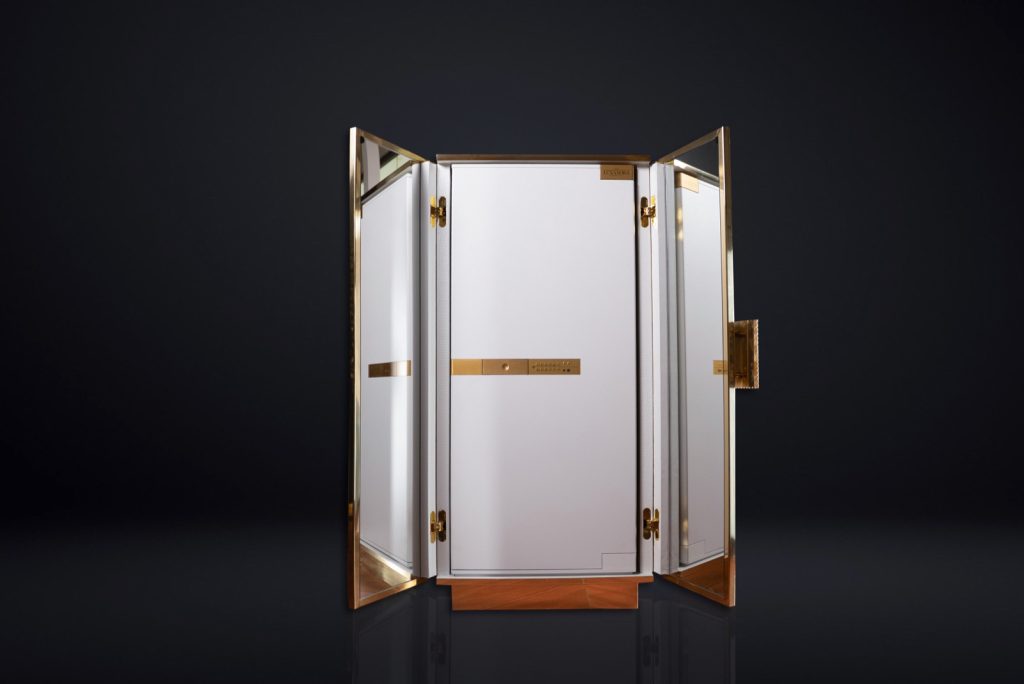
Best practice requires anchoring safes including many luxury home safes Dubai installations into reinforced concrete elements: floor slabs, shear walls, or columns. In villas, this often means foundation-adjacent placement or integration into structural cores. The goal is to make removal physically impractical, not merely difficult. A safe’s resistance is only as strong as what holds it in place.
Visibility Through Exposure, Not Display
A safe does not need to be visible to be compromised. Repeated exposure to housekeeping staff, maintenance technicians, contractors, or even casual guests gradually erodes its secrecy. Security failures in residential environments are rarely dramatic. They are incremental. Someone notices. Someone remembers.
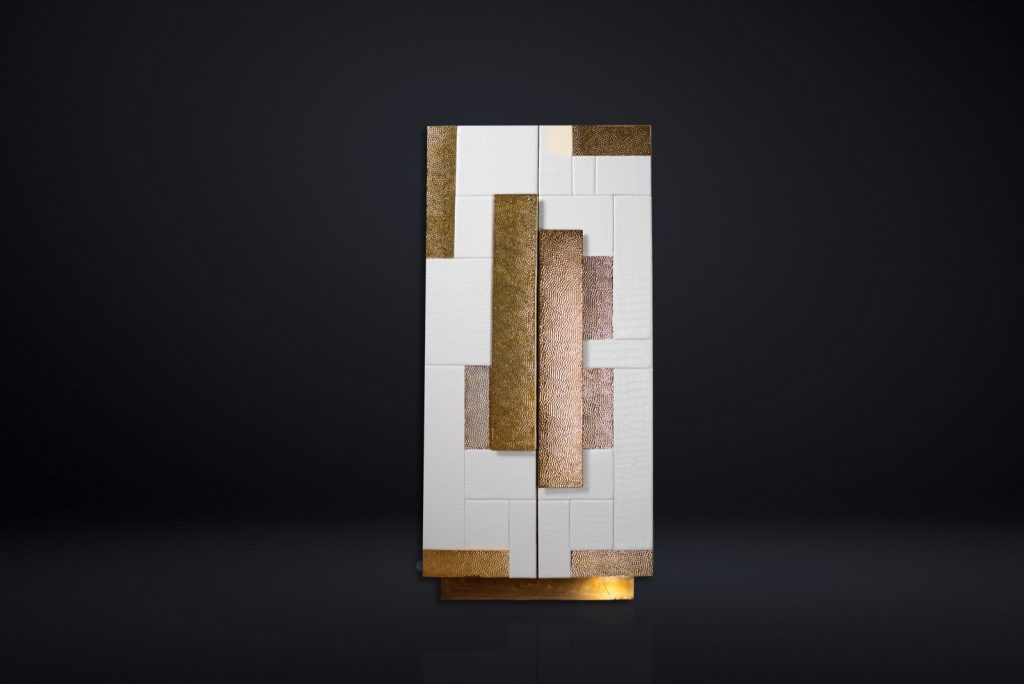
For this reason, effective placement avoids rooms with frequent third-party access. Safes should be concealed behind fixed architectural elements, false panels, or custom cabinetry that blends seamlessly into the interior envelope. Discretion is not aesthetic preference. It is operational security.
Environmental Stress As A Silent Risk
Dubai’s climate introduces variables often ignored during installation. Coastal humidity, airborne dust, and temperature fluctuations can degrade locking mechanisms, biometric readers, and internal electronics over time.
Safes positioned near external walls, bathrooms, or HVAC drainage lines are particularly vulnerable. Corrosion, condensation, and sensor malfunction are not immediate but they are cumulative.
Optimal placement favors climate-stable interior zones, away from plumbing and air-handling infrastructure. In high-value installations, internal humidity control and moisture-absorbing systems are increasingly standard, especially for document storage and collectibles. A safe that fails when needed is not secure regardless of certification.
The Compliance Gap
In Dubai, residential security intersects with regulation. For villa owners especially, security installations must align with broader safety and surveillance frameworks. Poor placement can complicate insurance claims, police reporting, or compliance audits.
When safes are integrated as part of a wider security concept aligned with access control, surveillance, and emergency planning they retain both legal clarity and operational integrity. Security should never exist in isolation from governance.
The Risk Of Centralization
Another subtle mistake is relying on a single, oversized safe to protect everything. This creates a single point of failure. In high-value residences, a layered approach consistently proves more resilient.
Separating documents, jewelry, digital assets, and sensitive items across multiple secure locations reduces impact even in worst-case scenarios. Some homeowners introduce secondary safes discreet, smaller, and strategically placed to distribute risk without compromising convenience. Redundancy is not excess. It is resilience.
Rethinking Safe Placement As Design Intelligence
The effectiveness of a home safe is not defined by steel thickness or lock complexity alone. It is defined by how well placement aligns with architecture, behavior, environment, and discretion.
In Dubai’s evolving residential landscape where mobility is high, lifestyles are global, and assets are diverse, security must be designed, not added.
A well-placed safe is not noticeable. It does not interrupt design. It does not demand attention.It simply works. And in security design, that is the highest standard.