Comparing Standard Doors vs. High-Security Villa Entrance Doors

Gun Safe Safety Standards in the UAE: What You Need to Know

What to Expect During a Panic Room Retrofit in an Existing Villa
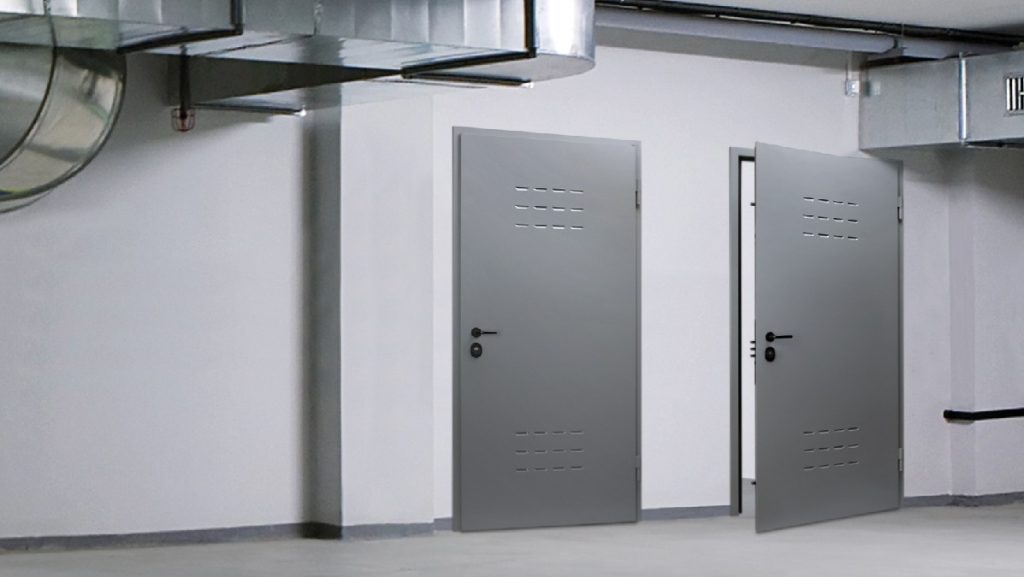
In contemporary villa design, the entrance door is often treated as a stylistic decision, an aesthetic “final touch” introduced after architecture, glazing, and finishes have already been approved. At Argus Security, that sequence is misplaced. The entrance door is one of the most consequential components in the building envelope. It influences not only first impressions, but also day-to-day security, long-term operational cost, indoor comfort, and lifecycle durability.
From the manufacturer’s side, we evaluate entrance doors as engineered systems rather than decorative products. And when viewed through that lens, the distinction between a standard residential door and a high-security villa entrance door is not merely a matter of “quality”,it is a difference in design intent, structural composition, and measurable outcomes. In what follows, we compare these two categories using security engineering, building performance principles, and lifecycle cost logic.
Structural Design Intent: Residential Convenience vs. Villa-Grade Resistance
Standard doors are generally developed to satisfy baseline residential requirements. Most are optimized for cost-efficiency, mass production, and acceptable performance under moderate usage. Their internal structure typically prioritizes reduced weight and simplified installation, often relying on lighter cores and limited reinforcement.
High-security villa entrance doors are built around an entirely different assumption: that the door must withstand targeted attack, prolonged environmental exposure, and frequent use while maintaining stable geometry and sealing performance. In practical terms, this means reinforced internal frames, stronger skins and cores, and hardware systems designed to work under higher stress.
This design difference matters because entrance doors remain among the most common breach points in residential security incidents. Various global burglary studies consistently indicate that a substantial portion of break-ins occur through front or main entrance doors, largely because doors represent both the most direct access route and the easiest structural weakness when built to standard residential specifications. In other words, in higher-value properties, a standard door is not simply “less secure”, it often becomes the most predictable failure point.
Locking Architecture: Single-Point Dependency vs. Multi-Point Load Distribution
A common misconception in residential construction is that security is primarily determined by the lock itself. In reality, forced entry is rarely a contest of lock-picking; it is a contest of load and leverage. Standard doors typically employ single-point locking, concentrating resistance in a small area near the handle and strike plate. Under prying force or repeated impact, that concentration becomes a vulnerability.
High-security villa doors, by contrast, commonly integrate multi-point locking systems that secure the door at multiple locations along the frame (often three to five points). The benefit is not only improved resistance to intrusion, but also improved alignment and sealing. Because the door is pulled evenly into the frame, it reduces micro-gaps that otherwise form over time due to sagging, settlement, or thermal movement. That translates into real-world gains in air tightness, acoustic control, and mechanical longevity.
From an engineering standpoint, the advantage lies not in “more locks,” but in distributing stress across the entire door assembly rather than allowing it to accumulate at a single failure point, much like the structural logic behind a properly integrated safe box installation within a secure residence.
Materials and Environmental Durability: Decorative Strength vs. Climate-Driven Engineering
In villa construction, environmental stress is often underestimated, particularly in regions where heat, UV intensity, humidity, and airborne dust accelerate material fatigue. Standard doors, even when visually appealing, can degrade prematurely when their materials and finishes are not designed for such conditions. Common long-term issues include warping, swelling, finish breakdown, corrosion in hardware, and progressive loss of sealing effectiveness.
High-security villa entrance doors are typically specified using materials selected for stability and endurance: reinforced steel cores, engineered composites, or thermally broken aluminum systems designed to resist deformation and corrosion. Where glazing is present, villa-grade systems typically require laminated or impact-rated glass not only for security, but for long-term durability and safety in high-exposure conditions.
Over time, the difference becomes visible in performance: standard doors often drift out of alignment, develop air leakage at the perimeter, or require repeated hardware adjustments, while villa-grade doors maintain geometry and sealing with far less intervention.
Building Performance: Energy Efficiency and Acoustic Control as Measurable Outcomes
The entrance door is part of the building envelope, and therefore participates directly in thermal performance. While walls and glazing receive the majority of attention, air leakage at doors remains a persistent source of hidden energy loss. Standard doors frequently fall short in this area because their sealing systems are minimal, and their frame tolerances are less precise.
High-security villa doors are usually designed with multi-layer sealing, insulated cores, and frames engineered for consistent compression. In practical terms, these features reduce air leakage and improve temperature stability near the entry zone, an area that frequently becomes a comfort problem in large villas due to the volume of conditioned air required.
Acoustic performance follows the same principle. Standard doors typically offer limited sound reduction because sound transmission occurs through perimeter gaps as much as through the door slab itself. High-security doors address this through sealing architecture and mass density. In high-demand contexts urban villas, coastal roads, or high-traffic communities this difference is not subtle; it directly shapes the lived experience of the home.
Lifecycle Economics: Lower Purchase Price vs. Lower Cost of Ownership
A standard door is often chosen because it appears economical at purchase. However, from a cost-of-ownership perspective, the initial price is only one component. Premature replacement, recurring hardware failures, resealing, repainting, alignment correction, and post-install security upgrades can accumulate into a materially higher long-term cost.
High-security villa entrance doors typically carry higher upfront investment, but their value is expressed through reduced maintenance, longer service life, improved energy performance, and fewer security interventions over time. When evaluated across a 10–20 year horizon—which aligns with how villas are owned and maintained the financial logic often shifts. The “cheaper” door becomes expensive, and the engineered door becomes the more rational specification.
The central conclusion from the manufacturer side is straightforward: a villa entrance door cannot be evaluated as a decorative object. It must be specified as an engineered system that manages security load, environmental exposure, air and sound control, and long-term mechanical stability.
Standard doors may perform adequately in conventional residential contexts, but villas operate under different assumptions: higher asset value, greater privacy requirements, more demanding climates, and stronger expectations of durability. In such settings, the entrance door should not be the weakest point in the envelope or the easiest target in the security chain.
For that reason, the distinction between standard doors and high-security villa entrance doors is not a matter of preference. It is a matter of performance, risk management, and long-term architectural integrity.