

From Documents to Digital Assets: What Should You Really Be Protecting in 2026?

Document Safes for High-Net-Worth Individuals: What to Look For
Inside the Mind of a UAE Investor: Why Physical Asset Security is Making a Comeback
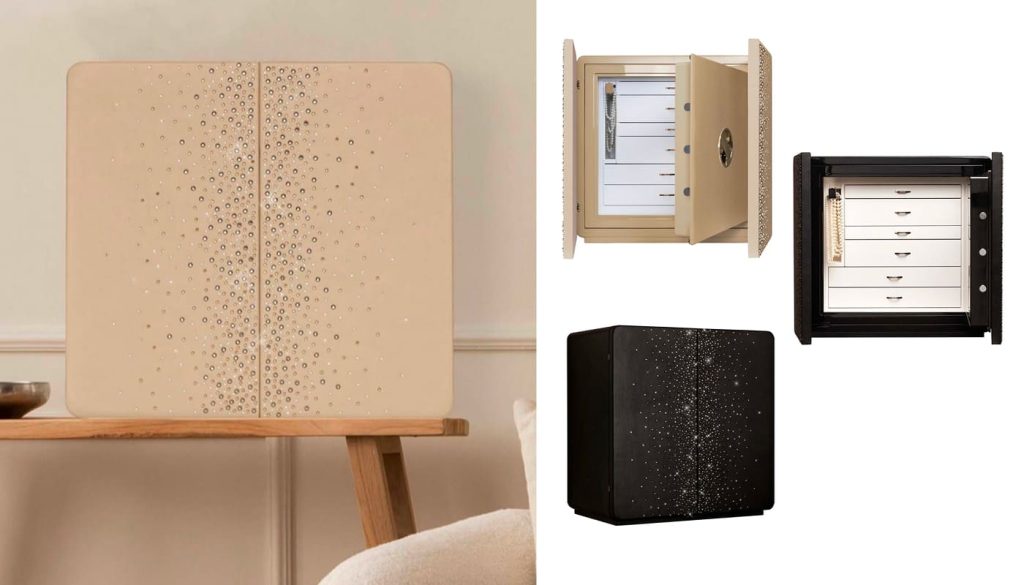
The idea of “security” has undergone a quiet but radical transformation. A decade ago, protection meant locking away passports, property deeds, and jewellery in a document safe box or a home document safe. In 2026, however, the definition of “valuable” has expanded far beyond the physical. Today, your most critical assets may not sit in a drawer—they exist in servers, clouds, and encrypted wallets. This shift raises an urgent question: what exactly should individuals and households be protecting today—and how?
The Expanding Definition of Value
Traditionally, physical documents formed the backbone of personal security strategies. Birth certificates, wills, insurance papers, and ownership records were and still are irreplaceable. Their vulnerability to fire, theft, or misplacement made the document safe box an essential household investment.
Yet, in 2026, value is increasingly intangible. Digital assets now include:
→Financial accounts and crypto holdings
→Intellectual property and business files
→Personal data (IDs, biometrics, login credentials)
→Cloud-stored memories (photos, videos, archives)
This shift’s magnitude can be measured. Global cybercrime losses reached billions annually, with over 859,000 complaints and $16.6 billion in recorded losses in a single year. Even more shockingly, 73% of respondents claim to have been affected by fraud made possible by the internet. The implication is clear: items that were previously physically locked are now digitally accessible and often more vulnerable.
The Internet Security Myth
A common misconception is that digital means safe. Cloud storage, password managers, and banking apps all promote security through their user-friendliness. However, the current state of risk paints a different picture. Cyberattacks are becoming industrialised systems rather than isolated episodes. AI has made ransomware, phishing, and identity theft more sophisticated and scalable. In fact, in only one quarter of 2025, more than a million phishing assaults were reported.
Additionally, the incorporation of AI has made it easier for fraudsters to enter the market. Deepfake identities, automated schemes, and fraudulent emails can now be mistaken for genuine correspondence. In this situation, depending only on digital platforms without additional security is like leaving a vault door open.
Physical vs Digital: A False Dichotomy
The conversation is often framed as physical versus digital security. In reality, this is a false dichotomy. The modern security model is hybrid.
Consider this:
A passport stored digitally is still vulnerable to identity theft.
A cryptocurrency wallet relies on a recovery phrase—often stored physically.
Cloud backups may contain legal papers, but original copies are needed for verification.
Because of this interconnectedness, digital and physical security must support one another. These days, a home document safe serves as a control point for digital access as well as paper. A bridge between digital and physical security can be established, for instance, by keeping encrypted USB drives, hardware wallets, or backup authentication keys within a secure safe.
What You Should Actually Be Protecting in 2026
To build an effective protection strategy, assets must be categorized not by form, but by risk and impact.
-
Identity Assets
Your identity is your most valuable asset in the digital age. This includes:
Passports and national IDs
Biometric-linked credentials
Login access to financial platforms
Identity theft remains one of the most common and damaging forms of cybercrime.
-
Financial Access Points
It is no longer just about cash or gold. Today’s financial exposure lies in:
Banking credentials
Cryptocurrency wallets
Investment accounts
A single compromised password can lead to catastrophic loss.
-
Legal and Ownership Records
Despite digitization, physical originals still hold authority:
Property deeds
Contracts and wills
Insurance policies
These remain best protected in a document safe box, ensuring both security and accessibility.
-
Digital Memory and Intellectual Property (H3)
Personal and professional data now carry emotional and economic value:
Family photos and archives
Business files and proprietary data
Creative works
Unlike physical items, these can be erased, duplicated, or held for ransom.
-
Access Infrastructure
Perhaps the most overlooked category is the infrastructure that grants access:
Password manager master keys
Two-factor authentication devices
Backup recovery codes
If these are compromised, all other protections collapse.
The Rise of Integrated Security Thinking
In 2026, security is about ecosystems rather than discrete instruments. For example, 73% of Middle Eastern organizations prioritize cybersecurity at the executive level, and these organizations are increasingly viewing it as a strategic asset. Households are beginning to follow a similar trajectory. The modern approach combines:
Physical safes for critical access points
Encrypted digital storage
Multi-factor authentication systems
Redundant backups across locations
This layered model aligns with the emerging “Zero Trust” philosophy, where nothing is assumed safe without verification.
Conclusion: Security Is No Longer About Storage, It’s About Control
Risk has increased rather than decreased as paper gave way to pixels.How easily your belongings can be accessed by the wrong person is becoming more important than where they are kept. Although its function has changed, a home document safe is still essential. It is now a physical anchor in a digital security approach rather than merely a place to store paper. The most secure people in 2026 are not those who only rely on history or technology, but rather those who recognise that the best defence comes from combining the two.

