

Inside the Mind of a UAE Investor: Why Physical Asset Security is Making a Comeback

From Documents to Digital Assets: What Should You Really Be Protecting in 2026?
Jewellery Vault Design for Retail vs Residential: Two Completely Different Security Philosophies
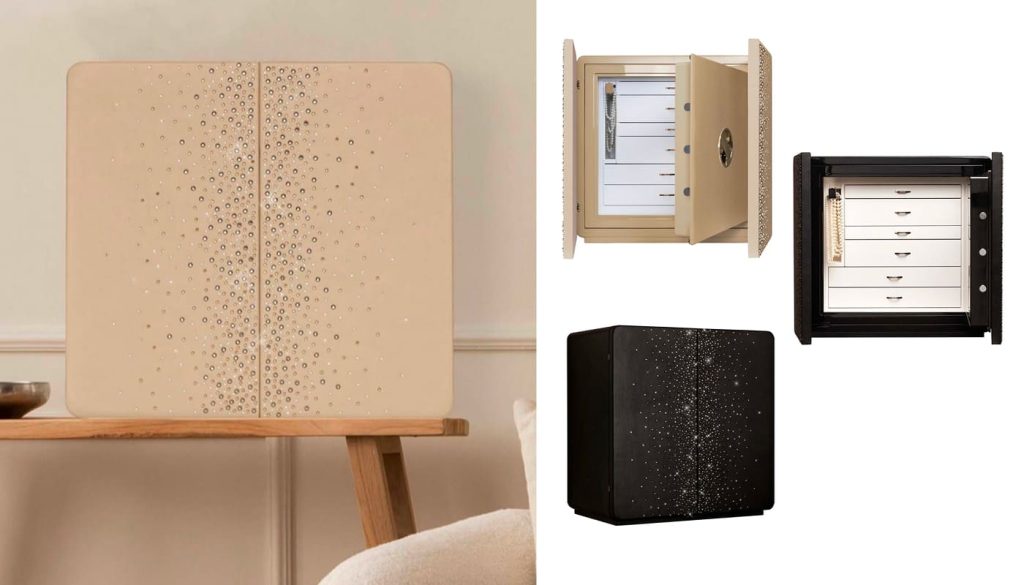
An unexpected change is taking place in a region known for algorithmic trading, fast digitisation, and cryptocurrency speculation. Long seen as pioneers of financial innovation, UAE investors are subtly reverting to something far more basic: tangible assets. Not merely possessing them, but fiercely defending them. This comeback is not sentimental. It is highly psychological, premeditated, and strategic.
The New Investor Paradox: Physical Anxiety, Digital Wealth
The UAE has become a global center of wealth, drawing capital inflows and high-net-worth individuals at a rate never seen before. However, investors are clearly changing their behaviour despite having access to sophisticated financial instruments.
According to HSBC’s 2025 Affluent Investor Snapshot, cash allocations in UAE portfolios have dropped to just 13%—the lowest globally, as investors redirect capital into gold and alternative assets. More notably, 57% of affluent investors plan to increase their exposure to gold, with strong demand for physical forms like bars and coins. This is not merely diversification. It is de-risking through tangibility. In an environment where digital wealth can fluctuate overnight, physical assets offer something algorithms cannot: certainty of possession.
Tangibility as Psychological Security
To understand this shift, one must move beyond economics into behavioral finance.
Physical assets, such as gold, watches, real estate, and collectibles, offer sensory reassurance. You can see them, hold them, and store them. In uncertain markets, this tangibility becomes a form of emotional insurance.
Consider the rise of luxury watches in the UAE. Once symbols of status, they are now treated as appreciating assets. Market data shows that collectible timepieces have demonstrated long-term value growth, even outperforming traditional assets in certain cycles.
This explains the growing demand not just for watches, but for infrastructure around them, such as the automatic watch winder box. These are no longer accessories; they are part of an asset preservation system.
The psychology is clear: if an asset holds value, it must be maintained, secured, and controlled.
Volatility Is Rewriting Trust
Global economic instability is accelerating this behavioral shift. Even traditional “safe havens” are showing cracks. Gold, historically a stable asset, has recently experienced sharp fluctuations amid geopolitical tensions and interest rate pressures. Paradoxically, this volatility is not pushing investors away from physical assets—it is forcing them deeper into them.
Why?
Because price volatility does not equate to ownership volatility.
Digital assets carry layers of counterparty risk, platform failures, cyber threats, and regulatory changes. Physical assets, by contrast, offer zero counterparty dependency. Once owned, they are fully controlled by the investor. This distinction is subtle but powerful. It shifts the focus from returns to control.
The Rise of “Private Vault Thinking”
As physical ownership rises, so does the need for secure storage ecosystems. This is where the resurgence of safes UAE becomes particularly relevant. Modern investors are no longer satisfied with basic storage. They are adopting what can be described as “private vault thinking”:
→Segregating assets across multiple secure locations
→Investing in high-grade residential safes
→Integrating physical storage with digital access controls
→Protecting not just valuables, but access mechanisms (keys, recovery phrases, credentials)
The safe is no longer a passive object; it is an active node in a broader wealth protection strategy.
In high-value households, it is common to find a combination of:
→Document safes for legal and ownership records
→Specialized compartments for jewellery and bullion
→Dedicated systems for watches, including automatic watch winder box units
→Fireproof and biometric-enabled access systems
This reflects a shift from storage to systemization.
Cultural and Regional Context Matters
The UAE’s relationship with physical assets is also deeply cultural. In particular, gold has emotional and monetary value. According to central bank data, the UAE strengthened its position as a strategic asset by increasing its gold holdings by almost 26% in the first half of 2025.
While traditional jewelry consumption has decreased, demand for gold bars and coins has increased at the retail level, suggesting a shift from ornamental ownership to investment-driven buying. This development is reflected in the markets for luxury goods and real estate, where investors are placing a greater emphasis on capital preservation than on speculative growth.
The Real Shift: From Growth to Preservation
Perhaps the most important insight is this: UAE investors are not becoming more conservative, they are becoming more strategically defensive. The modern portfolio is no longer built solely on maximizing returns. It is designed to:
Withstand systemic shocks
Preserve purchasing power
Maintain liquidity across asset classes
Ensure access under any condition
Physical assets play a critical role in this architecture because they operate outside digital fragility.
Conclusion: Security Is the New Status Symbol
In the past, wealth was displayed. Today, it is protected. The rise of physical asset security in the UAE is not a rejection of digital finance; it is a recognition of its limitations. Investors are no longer asking, “What should I invest in?” but rather, “How do I ensure I never lose what I own?” From gold bars to luxury timepieces, and from document safes to safes in the UAE, the emphasis has shifted toward control, custody, and continuity. In 2026, the most sophisticated investor is not the one chasing the highest return but the one building the most resilient system.
And at the center of that system lies a simple idea, rediscovered:
If it matters, you should be able to lock it.

